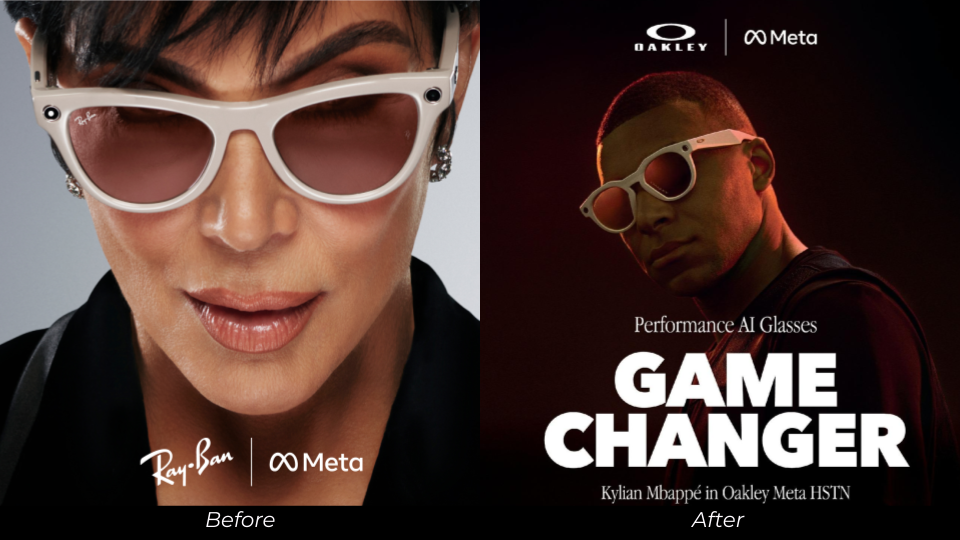
Meta AI Glasses: Using Cultural Thinking to Establish Brand Positioning
Client: Meta
Challenge: Product Positioning, Product Market Fit
My role: Research Lead, Strategy Director
Tools: Cultural Research, Product Positioning
May 2025
New York, New York
Meta AI: Tapping into cultural thinking to unlock Meta AI glasses brand positioning
Background
Meta wanted to be part of Gen Z culture. They could offer hands-free photography, but for whom, and for what purpose?
Coming to the project, we knew what didn’t work. Meta had explored positioning the glasses as an AI assistant, using A-list celebrities. Social media figures asked Meta AI questions. While interesting to watch, this did not make the product any more relevant to the life of a typical twenty-something. People heard about the product, even went to the store, checked it out, and then put the glasses back. The issue wasn't that people didn't want them; it was that they had no place in their routine.
Challenge
AI has amazed us all, but the dominant reaction has been "interesting, but not relatable to day-to-day life." How to position a cutting-edge tech product in a day-to-day reality.
My role: I led cultural exploration and positioning strategy work. To build on Meta's vast experience and knowledge, I worked closely with the client and primary researchers. Each opportunity was tested with recent Meta Glasses audiences.
Borrowing from the CPG playbook:
Occasion strategy is a go-to approach in the CPG market. Coca-Cola, for example, is an afternoon pick-me-up. Technology rarely uses this thinking, but increased competition for attention makes it necessary. Being specific helps people learn by example: here are times when Meta AI glasses are a must-have, not a novelty.
Adoption curve benchmark:
Meta AI glasses’ closest benchmark? Headphones. They emerged in the 60s as a quirky piece of equipment, then became a cultural staple. While decoding success, several patterns emerged: visibility, desirability, and conversation-worthiness.
Visibility: Being a fashion item drives adoption in visual culture.
Desirability: Defining a niche but influential community adds cultural visibility and makes an item desirable. For headphones, Dr. Dre by Beats became the go-to for audiophiles.
Conversation-worthiness: Most discovery happens through word of mouth. Today, that is mostly online, but the principle is the same. People need something to talk about.
Cultural Thinking:
We scanned where Gen Z drives trends in social life. Two domains emerged: live experiences and sports.
Live music: Creates tension between capturing the moment and staying present. Positioning the glasses as a hands-free alternative at live shows provided a clear, desirable example.
Sports: Sports showed stronger potential. Post-pandemic interest in sports has grown rapidly. Gyms and sports clubs are both social spaces and live experiences. The glasses were positioned as a solution for active workouts, to track stats and capture the moment.
Both domains offered visibility, desirability, and conversation-worthiness. The key difference was frequency: live music is occasional; sports are daily or weekly.
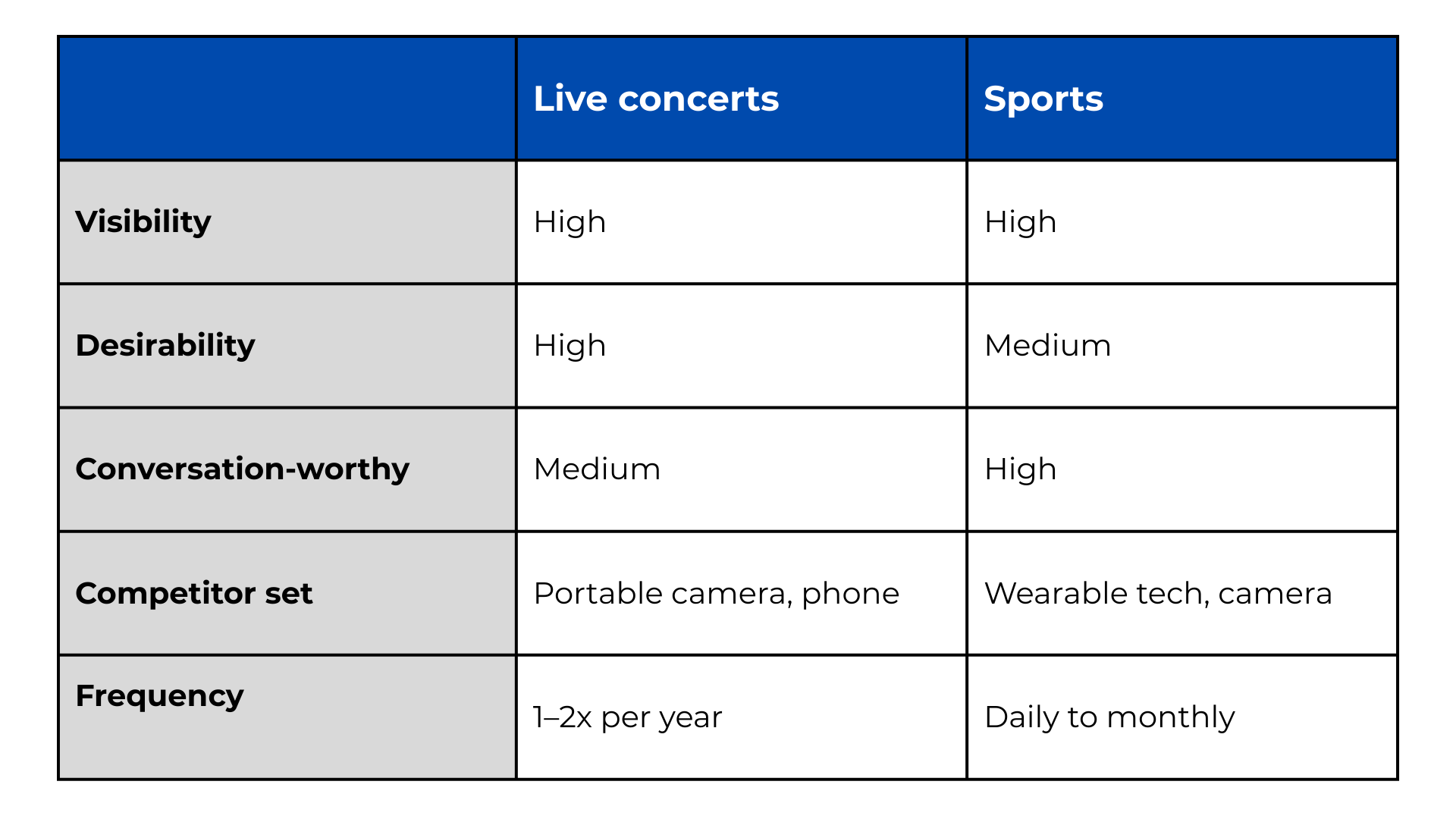
Meta AI Glasses: Occasion strategy analysis
The results:
The company implemented both recommendations. Live music became the first entry point, launching with a Doja Cat campaign. The sports case required product modification and expanded partnerships, including Oakley, to build a model rooted in sports insights.